• Home
  • About
  • Write For Us

3 Kids and Us

  • Children
  • Education
  • DIY
  • Fashion
  • Finance
  • Tech
  • Travel

Children At Play: The Many Ways Playing Games Benefits Your Child’s Development

January 17, 2019 by admin

As an adult needs to work in order to stimulate and exercise his or her brain, a child needs to play in much the same way. When a child plays, he or she learns about the world and discovers new things and the mind learns how to process. Furthermore, the child needs to play so that he or she can learn how to interact with oneself as well as with other individuals.

In fact, play for a child is of such vital importance that the United Nations has declared it as a basic right for every child. If you want to know more about why the UN has placed such importance on the play for a child, check out the below ways that play, whether it is learning based or unstructured and free, can benefit your child’s development.

– Encourage Creativity and Imagination

When a child plays, the child tends to imitate adults. A child will create made up games that imitate real life ‘adult’ situations. This helps to stimulate the child’s imagination and the events are usually based on real life. Through this imaginative storytelling, the child imagines and creates the narrative which then encourages abstract thinking. This abstract thinking then becomes the base for which the child can develop problem-solving skills as well as training the mind for advanced learning.

– Cognitive Growth

Several studies have shown that play is great for the developing brain. Moreover, when a child gets lost in free play, the free play can positively affect how the neural circuits become connected. When a child is free to experiment and play freely, it encourages confidence in the child as well as communication and intelligence.

– Behavioural and Emotional Benefits

When a child can enjoy regular play stress, anxiety and frustration become reduced. A child who can play regularly will develop a strong sense of self and self-esteem. For a child’s emotional development, the child will develop emotional flexibility as play will encourage a child to cope with unexpected changes. This promotes resilience. Want to find some great games to encourage this for your child? Then check it out!

– A Child can Learn to Interact with Others

Children who spend time playing with others in a group setting learn how to positively interact with others. They learn how social and cultural differences can be perfectly fine and that being different doesn’t mean that different is bad. A child who learns how to be cooperative in a group setting from a young age can benefit from this as he grows older and will be introduced into more group settings. The following skills can also be learned: navigating relationships, group behaviour and self-control. These skills can form the foundation for a. developing a child’s healthy grasp of social skills.

– Children can Learn to be Independent

The benefits of play for a child are not only restricted to play which relates to group play. Solo play can encourage a large number of benefits as well. A kid who learns to play on his builds a strong sense of self, creativity and independence. There are many children who may prefer to play alone when given the choice and it is important for parents and guardians to know that this is not a negative sign and that the child is learning exactly the things that he or she needs to through his or her choice of play.

– Play can Promote Physical Benefits as well

The majority of kids have an abundance of energy and enjoy moving around and being active. Physical play becomes a kind of exercise for children and assists them in stimulating growth, enhancing reflexes, hand-eye coordination, motor skills and other important things such as promoting healthy bone density and cardiovascular health. As a child learns to have fun moving his body, this sense of trust and enjoyment through moving the physical body will continue and help the child to develop a healthy attitude towards physical activity.

Furthermore, when a child is physically active, the child learns to trust in his or her physical body, they learn how to use their body correctly and that their body should be treated with care since it can help them to perform physical activities.

– Memory and other Mental Skills

There are many mental skills that a child can learn through play. In games such as Scrabble, a child will learn broader spelling and vocabulary. Through word related games such as Scrabble, the child is exposed to new words and can also begin to understand word associations.

The more traditional card and board games such as Rummy and Chess can encourage a child to develop strategic and logical thinking as well as problem-solving. Memory skills are one of the important skill a child can learn through games. Through playing more complex games where rules need to be remembered, the child’s memory ‘muscle’ is trained. This can also happen through the above-mentioned games, where the child needs to remember previous moves made by the opponent in order to anticipate future moves.

Always remember that play is one of the most essential parts of childhood. Play can have far-reaching positive consequences and can become the backbone of a child’s development. Whenever a new skill is learned through play, or the child experiences a ‘win’ or completion of a game, the child will feel a sense of pride which will reinforce self-confidence and self-esteem. In today’s modern day, there is an extreme amount of importance and pressure placed on winning and on being ‘great.’ When a child has no time to play because too much importance is placed on structured development, key developmental essentials can be lost. A child needs play. Children are naturally inclined to be curious about their environment, their surroundings and about life itself. Play helps them to figure out life and helps them to understand themselves with respect to the surrounding world. And when the play is used to explore these natural curiosities, the child can figure it out with a sense of independence and develop essential self-esteem.

Filed Under: Children, Education Tagged With: child development, children, education

4 Ways to Plan Towards Your Family’s Future

January 17, 2019 by admin

Your family is something in some cases you can choose and in others, people that are given to you. Nevertheless, if you have one, you probably want to give them the best of your time and resources while you can. One of the ways to do this is to plan towards their future. Everyone has a different vision for their family, and this means that how they plan and what’s on their agenda may be different from yours. Even though this may be the case, there are still some common themes that every family shares when it comes to prepping for the future. Here are four in particular that you can use when planning your family’s future.

Save Towards College

If you don’t already have kids over the age of 18, then you may be thinking about what they’re going to do when it’s time to spread their wings and go off to college. If you want to help them pay some or all of their tuition, then you should begin saving towards it now. To save for their college tuition, see if your state has a 529 plan to help you save. How it works is that you save after-tax dollars to the account and they are invested as well as allowed to grow tax-free.

You may also want to try ROTH IRAs, but the downside is that you don’t get a tax deduction for your contributions. A major difference between the two is that the 529 plan has to be used for higher education or you’ll be given a 10% penalty while the ROTH IRA can be used for anything.

Think About Health

When planning your family’s future, health is a major thing to think about. This is because the healthier your family is, the fewer worries you have and the less it will cost you in healthcare bills. Think about how you can grow a healthy family by examining what you’re eating and how active you are. To raise a healthy family, try sticking to fresh foods where possible. Go on adventures that require physical activity to encourage fitness and help you maintain healthy weights.

In addition to this, mental health is important too so make sure you’re talking about every and anything. Make your home somewhere everyone feels safe to be open, honest and themselves.

Plan for Post-retirement

People don’t like to think about what’s going to happen to them in their older years out of a fear of old age amongst other reasons. However, thinking about how you’re going to live in your older years and planning for contingencies like failing health is important.

You may want to think about investing in long-term care insurance so that you get the care and attention you need later on in life if you think it’s a good option for you. You can see a range of long-term care insurance providers on Insurance Geek and compare to see which is most affordable.

Save Enough

Money is important when raising a family, especially if you want more flexibility and better quality of life. Set up a family budget and get everyone involved so they understand what you’re spending on and why. It’s also a way to make sure your loved ones learn essential money-management skills that will carry them through life.

Planning your family’s future is important, especially in your post-retirement years. You want to know that your kids have the best opportunities and you can retire without having to worry about how you’ll cope on a daily basis.

Filed Under: Children, Finance Tagged With: family, finance, money, planning ahead

The Baby Boomers and Their Future Needs

December 29, 2018 by admin

There has been a lot of talk about the baby boomer generation this past decade. Born into the booming post World War II economy, the baby boomers were able to accomplish feats never before seen in human history, such as the launching of the Voyager 1 probe (the first man-made object to leave the solar system), and making seat belts mandatory in all legal road vehicles.

The Post WWII Baby Boom of 1946 – 1964

The baby boomer generation consists of persons that were born between the years of 1946 and 1964 in the US. Today they are roughly 54 to 72 years old, and many do reside or will reside in Residential Assisted Living facilities. Seniors do want to stay in their homes as long as possible, but it’s good to have another plan in case staying in their home is not an option.

A Standard of Living Unprecedented in Human History

One of the most notable qualities of the baby boomer generation is that they were privileged to live in a time period that could be considered the peak of the middle class and enjoy a standard of living that has never been seen before throughout history. This is, of course, thanks to the post-WWII economic boom mentioned before, which can be credited to the actions of past generations, and a perfect storm of economic factors.

The baby boomer generation is aging. They have needs that will have to be met in the coming years. Care centers will be in great demand. There would be great investment opportunities for those looking ahead to this need. No matter what community you might live in, there is a need for assisted living centers and the need will continue to grow.

In the United States right now, there are over 46 million people over age 65. It is said that 40% of Americans over 65 years old will need to live in some type of senior care community or an assisted living center at some point in their lives. Over the next decade, as the aging population increases, the number of those in the United States who need assisted living or memory care centers will be approximately 11 million. The demand will be high. Right now, there are not enough centers to handle this growth. That is why it will be vital to have more residential assisted living centers built and staffed.

Twilight of the Boomers – Assisted Living vs Nursing Homes

As many boomers enjoy their retirement, it comes time to begin preparing for their final days. As they grow older and it becomes harder for them to care for themselves, assisted living and nursing homes become a necessity.

The difference between assisted living and a nursing home boils down to a few things. Nursing homes are typically for the elderly who have completely lost the ability to care for themselves or have health problems that require constant attention. On the other hand, assisted living allows more freedom and independence, and is a great option for the boomers who can still take care of themselves on a day to day basis, more or less.

Assisted living centers offer entertainment, meals, socializing, freedom to come and go, and a room of their own. There is a nurse on the premises to help a tenant, if needed, but it is not like a hospital. Another great thing about the assisted living center is that there are housekeeping services to do the cleaning for the tenants. This is a great plus for those living there. You should plan on touring one and get more information about them.

If you’re a baby boomer, or have one in your life, you should be looking into making arrangements for assisted living, or nursing home care, depending on your situation. The sooner you get started the better, and the more research you do, the better off you’ll be when it comes time to take action. For investing purposes, talk to a professional to see if investing in an assisted living center is the right things for you. It could be a very good investment in the future.

Filed Under: Finance Tagged With: baby boomer, future, wellness

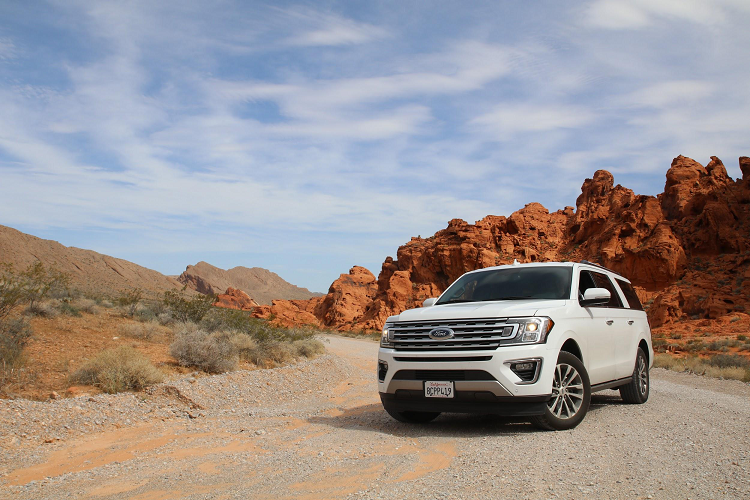
Choosing the Perfect Car for Traveling with Family

December 27, 2018 by admin

Buying a new family car is nothing short of reaching an exciting milestone for every family. As the kids grow, the family needs change, and along them the travelling gear. Trolleys, cots and play yards are replaced with backpacks, surfboards, tents and fold-frame bikes. Nonetheless, the car-shopping time is full of excitement on all sides, with discussions, suggesting and pros-and-cons lists sprouting like mushrooms after the rain. To make things worse, manufacturers are spoiling us with yet unseen choices of models, types, colours and trims. Add the dealers’ or insurance discounts into the mix, and buying the best one really gets more difficult than it seems. However, when we’re making such a big decision, it’s important to call a spade a spade, so here is some weatherproof car-buying advice for a family that loves to travel.

Study the safety rating

While the vehicle safety should be among the first concerns for buying any kind of car, when looking for a family tourer, you should stay away from anything with less than four-star NCAP crash test rating. So, when you’ve made your shortlist, head on to your regional NCAP site and check the models to see how they fare on safety. EuroNCAP, for example, is particularly focused on child safety in its crash test assessments. If you live in Australia, the good news is that recent changes to Australian Design Rules allow for Isofix seats to be used in new cars sold in Australia without any modifications.

Chose the car body

Depending on where you live – inner city, suburbs or country, as well as how many children and pets you need to accommodate, you’re going to choose between a family hatch, saloon, estate or MPV. Five-door hatchbacks tend to be more practical than saloons of the same size, not only because of the bigger boot, but also because their design makes the interior space more flexible for fitting bulky items. While many family drivers swear by the estates, in reality, full-size saloons also have plenty of legroom in the back and a spacious boot. Multi-purpose vehicles, or people movers, are probably the best solution for families with older children who don’t need so much ‘gear’ but are keen on inviting a friend or two on a family trip.

How do you like to travel?

This is where you need to think whether a normal 2-wheel drive car will be enough or you need something with more power and clearance. Although in the last couple of years, the popularity of SUVs has exploded with manufacturers flooding the auto market with SUV-like versions of established lines in every niche, a thoroughbred high towing SUV can be immensely valuable for families who like to get the most out of their travels. Additional clearance and all-wheel, or four-wheel drive allow these vehicles to handle less than ideal road surfaces while towing a caravan or a boat trailer.

Set your budget

Unless you have your cash ready, you need to consider your financing options. Ask yourself how much you can really afford to set aside each month. For most families, the monthly new-car instalment should not go above 15% of the monthly take-home pay. The same rule applies for used cars, which are bound to be less expensive. If you’re leasing, arrange for a monthly payment of less than 10% of your take-home pay. On top of the car payments, you need to figure in the fuel and insurance costs. If you’re not sure what kind of cars you can afford through a certain monthly payment, there are plenty of online affordability calculators, listing the vehicles according to price range and the financing options.

Ask about after sale services and warranty

Buying happens once, but servicing is an ongoing process. So if you’ve settled down to two candidates, give the advantage to the one whose dealership is closer to where you live. Do you know a family that owns four cars, different models of a particular manufacturer? While the reason behind this might always be a personal preference, past experience or loyalty to a specific make, in many cases, it’s the local presence of the company’s showroom and workshop that makes the choice. Having two or more cars of the same make serviced and maintained close to your home saves you a lot of time and inconvenience.

Before swooping down on a new car, you need to research all the options, with your budget, driving habits and lifestyle in mind. Instead of sticking to individual traits like safety rating, body type or a particular make, you need to observe these as a whole and see which one would really suits your family in the years to come.

Filed Under: Travel Tagged With: auto, family car, road trip, travel

How to Choose Blush Bridesmaid Dresses for A Mix & Match Bridal Party

December 24, 2018 by admin

If you’re struggling to choose the aesthetic you want for your wedding VIPs, consider a mix & match bridal party. And one step better…a blush bridal party. This pale, soft and romantic shade of pink looks stunning in every setting. If you start with blush as your signature color, you can use it as a guide to mix and match your bridal party outfits.

Read on for our tips for choosing blush bridesmaid dresses.

Choose a universally-flattering shade

While blush is a beautiful shade, it’s not always the most flattering on certain skin tones. Very pale or fair skin tones can sometimes prove a little washed out when matched with blush. However, this is completely avoidable if you find the right shade. Go for blush tones which are a little deeper, with a little more pink as opposed to very nude or white-based. The more depth of color there is, the brighter your paler bridesmaids’ complexions will be.

Play with different styles

Once you’ve chosen your perfect shade of blush to flatter all of your girls, you can start to add a point of different for each bridesmaid. Mix and match wedding parties are great because they give each bridesmaid the chance to show her own style while still fitting the aesthetic. One could wear a mini with longer sleeves, one could wear a midi with a halterneck, and one could wear a simple shift with an off-the-shoulder neckline. These are just a few suggestions to get your mind thinking over the many possibilities. If all of your bridesmaids are wearing the same shade of blush, the same makeup story and similar hair styles, your bridal party will be cohesive no matter how contrasting the dress styles are.

Add brightness with makeup

The great part about subtler colors for bridesmaid dresses is that it leaves a lot of room for more color elsewhere. To add a fresh pop of brightness, you can choose bolder makeup shades. Keep the cheeks flushed, blushed and bronzed, and go for a pop of color on the lips such as a fuschia or coral. Blush is such a feminine, soft and romantic dress color, you can really play it up by choosing feminine makeup shades and glowing skin to match.

Play up the romance with soft accessories

Hair and makeup aren’t the only ways to add your own flair and special touch to your blush bridesmaid dresses. Think about what kind of jewelry, shoes and hair accessories you could add to the overall look. The softness of blush goes stunningly well with other soft shades and textures. You could find white or cream-colored flowers to create hair accessories for your bridesmaids, tucked into their hair for a feminine accent.

Conclusion

Blush is an absolutely beautiful color choice for your bridal party. Start by finding a shade to flatter all of your bridesmaids, bringing out the beauty of each complexion. Bring a unique touch to your wedding party by having a mix and match collection of bridesmaid dresses, with each bridesmaid wearing her own individual style. Your wedding will not only be soft, romantic, feminine and photo-friendly, but it will be memorable and unique.

Filed Under: Fashion Tagged With: bridesmaids, dresses, fashion, style, wedding

  • « Previous Page
  • 1
  • …
  • 33
  • 34
  • 35
  • 36
  • 37
  • …
  • 111
  • Next Page »

Join Our Family!

Sign Up Today!

Recent Posts

  • Top Family-Friendly Neighborhood Features in Resort Communities
  • Family-Friendly Plumbing Tips: Preventing Clogs and Water Damage in Busy Homes
  • Top Tips for Maintaining Your Family’s Dental Health
  • Smart Toy Choices: Supporting Cognitive, Emotional, and Physical Development in Children
  • Parenting and Dental Health: Why Dental Implants Matter for Busy Moms

Recent Posts

  • Top Family-Friendly Neighborhood Features in Resort Communities
  • Family-Friendly Plumbing Tips: Preventing Clogs and Water Damage in Busy Homes
  • Top Tips for Maintaining Your Family’s Dental Health
  • Smart Toy Choices: Supporting Cognitive, Emotional, and Physical Development in Children
  • Parenting and Dental Health: Why Dental Implants Matter for Busy Moms

Write For Us

Loading

Like What You See?

We left our home in Sydney, Australia many moons ago in May 2012 and, other than a brief stint back in Perth for Christmas and a wedding in early 2014, we have been travelling the world nomadically ever since, running a business from our laptops and we’re here to show you how to do it!